
Expand Beyond Malta — EU Support for Internationalisation and Export Strategy
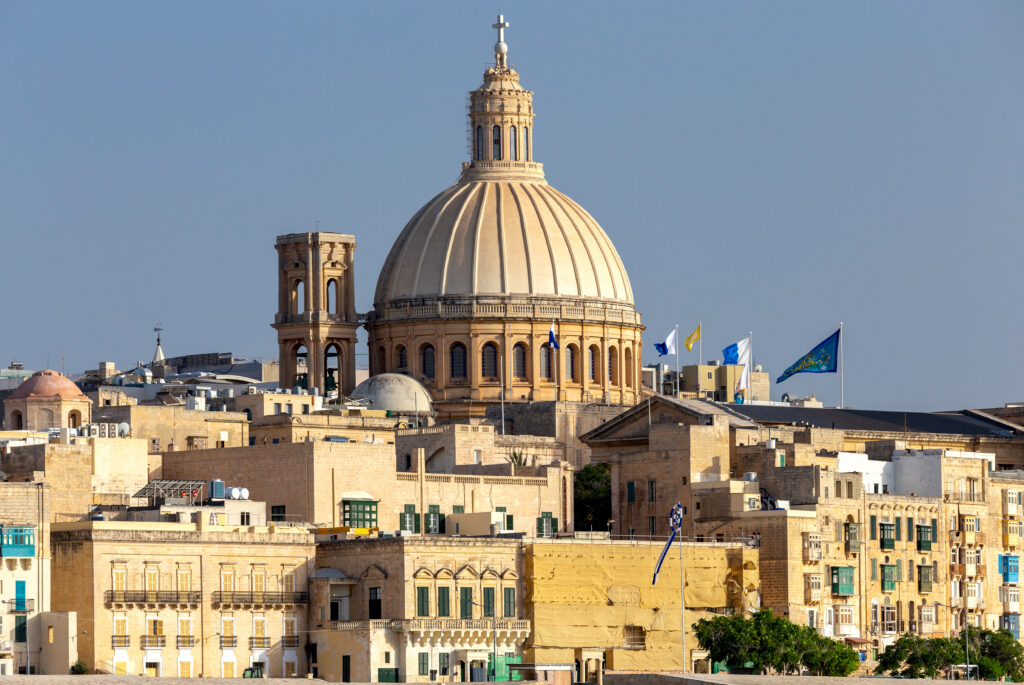
Funding to research foreign markets and develop export plans.
Why it matters: Under ERDF Policy Objective 1 (“Smarter Europe”), Malta co-finances SME projects that build export capabilities—so you can validate markets, win first customers abroad, and scale with less risk.
As EUFunding.com.mt (an initiative of analysenkontor GmbH), we help Maltese SMEs design export strategies and secure the right mix of grants. Below is a practical, up-to-date playbook written from the viewpoint of a funding advisor who files and delivers these projects end-to-end.
What gets funded (typical scope we build into winning applications)
1) Market intelligence & validation.
Eligible projects often start with structured market research for 1–3 target countries: customer segmentation, competitor mapping, regulatory and certification pathways, channel/partner scanning, and pricing tests. For ERDF-backed measures, the focus is on actionable outputs—e.g., a country-by-country go/no-go with prioritized segments and quantified first-year targets—rather than “desk reports”. This aligns with PO1’s aim to spur smart economic transformation and SME competitiveness.
2) Export strategy & entry plan.
Grant-eligible deliverables typically include an export plan with route-to-market, pilot campaigns, distributor/T1 partner shortlists, regulatory roadmap, and a 12–24-month budget. We tie each action to measurable KPIs (qualified leads, pilot orders, partner MoUs), which selection committees expect under ERDF results-logic.
3) Go-to-market execution building blocks.
Depending on the scheme, you can co-finance trade fair participation and missions, international B2B meetings, localized sales assets (datasheets, landing pages), and digital export marketing for target geographies. In Malta, this toolkit is often complemented by TradeMalta instruments (e.g., digital marketing support, trade promotion) and non-financial services like training, missions and partner matchmaking.
4) Capability and networks.
Beyond grants, the Enterprise Europe Network (EEN) provides export-readiness mentoring and partner search. We routinely fold EEN support into the work plan so your team maintains momentum after the grant-funded phase.
Malta: where the money is (and how it’s structured)
Business Enhance (ERDF 2021–2027 / RRP) — demand-driven with cut-off dates.
Malta’s Business Enhance framework runs open rolling calls with periodic evaluations. Calls and calendars are announced centrally; cut-offs are clustered monthly/bi-monthly across the year. Rather than a single “export grant”, internationalisation actions are usually eligible within specific lines (e.g., feasibility/strategy development, digitalization for cross-border sales, or SME capability building). We plan the phasing so research/strategy locks in before spend on fairs and campaigns.
TradeMalta schemes — practical boosters.
For market entry and early traction, TradeMalta finances export-oriented marketing and trade promotion and runs programmes (e.g., Global Growth) that pair funding with coaching, missions and pavilions at major fairs. These tools are designed to bolt onto ERDF-funded strategy work, giving you both a plan and execution runway.
Complementary national measures.
Malta Enterprise and state partners also provide internationalisation-adjacent help (e.g., services via EEN; logistics support in specific cases). We use these where they unlock bottlenecks such as partner search, compliance steps, or small travel gaps that a main scheme won’t cover.
Budget & co-financing: what to expect (and how we design it)
Grant intensity and caps.
Most SME measures co-finance 40–60% of eligible costs, with scheme-specific ceilings. Under Business Enhance, consolidated SME lines now operate with a single maximum grant threshold per project (and a minimum eligible spend), assessed at each scheduled cut-off. We budget in “blocks” (research → strategy → first execution) so you can hit results between cut-offs and avoid tying up cash unnecessarily.
What costs are typically eligible.
For strategy phases: external consultancy for market studies/entry plans, specialized legal/regulatory checks, and limited travel to validate hypotheses. For early execution: fair participation, B2B missions, localized digital campaigns and content, and translation. We always segregate internal staff costs unless a scheme explicitly allows them, and we track deliverables against the output/result indicators that the Managing Authority audits.
State-aid frame (de minimis).
Many export supports fall under de minimis, with a €300,000 ceiling over three fiscal years per single undertaking. We calculate your headroom before locking the budget and plan multi-call roadmaps to stay compliant while maintaining funding continuity.
How to build a robust justification (and score well)
1) Problem–Market–Fit first.
Start with the commercial pain/opportunity: quantified TAM/SAM for 1–3 countries, the customer jobs-to-be-done your product solves, and evidence that timing is favourable (procurement cycles, regulatory shifts, buyer constraints). Evaluators reward clarity and credible data, not volume. We use third-party benchmarks sparingly, focusing on facts that translate into revenue hypotheses. (This mirrors ERDF’s emphasis on strategic transformation under PO1.)
2) A falsifiable plan.
Your export plan should include testable milestones: X distributor meetings by month 6, Y pilot orders by month 9, Z% repeat by month 12. We map these to scheme indicators and attach a monitoring plan (dashboards, CRM stages, fair-to-pipeline conversion) so the case reads like a managed growth project, not a marketing wishlist.
3) Value-for-money & additionality.
Show why grant support accelerates market validation, reduces risk, or unlocks capabilities you cannot fund at speed (e.g., regulatory groundwork, channel build). Then demonstrate durability beyond the grant: resourced account management, partner enablement kits, and a reinvestment plan based on early export cashflows. Past EU audits stress targeting the factors that limit SME competitiveness—your narrative should address those bottlenecks head-on.
Example project architectures (we implement these often)
A) Med-tech device to DACH & Nordics
- Phase 1 (Funded research): HTA/market access scan, notified-body pathway, KOL interviews, partner map.
- Phase 2 (Strategy): reimbursement and route-to-market plan, distributor scorecard, launch economics.
- Phase 3 (Execution): two trade fairs + targeted hospital system pilots; localized clinical collateral.
- KPI: 3 distributor MoUs, 2 hospital pilots, €250k forecast pipeline in 12 months.
B) Specialty food brand to GCC
- Phase 1: market sizing and compliance for labelling/ingredients; price corridor and channel margins.
- Phase 2: export plan with importers/retailers shortlist, shipping/Incoterms model.
- Phase 3: pavilion participation + digital campaigns geo-targeted to buyers.
- KPI: 10 B2B meetings → 3 trial orders; repeat buy-in within 6 months.
C) Industrial software to Benelux
- Phase 1: competitor teardown and ICP definition by vertical.
- Phase 2: partner-led entry plan (system integrators), enablement kit (playbooks, demos).
- Phase 3: lighthouse PoCs and case-study pipeline; localized compliance statements.
- KPI: 2 SI partners onboarded, €400k qualified pipeline, 1 PoC converted.
Submission discipline (Malta specifics we manage for you)
- Cut-offs & calendars. Business Enhance operates rolling calls with periodic assessments; we schedule internal gates two weeks ahead of each cut-off and keep “Plan B” markets ready if evaluators request scope narrowing.
- No double funding. If you combine schemes (e.g., strategy under ERDF, trade promotion via TradeMalta), we ring-fence cost items and suppliers to avoid any overlap—this is non-negotiable in EU funds.
- Evidence pack. We maintain quotes, time sheets (where admissible), fair/missions evidence, and KPIs in a claim-ready folder mapped to the official indicators—this significantly speeds reimbursement.
How we help (deliverables you can expect)
- Export readiness audit & country shortlist (3–5 markets with go/no-go logic).
- Grant strategy (scheme selection, budget under de minimis/GBER, cut-off timetable).
- Export plan (route-to-market, partner model, regulatory roadmap, 12–24-month P&L).
- Execution kit (fair/missions calendar, buyer lists, localized assets, KPI dashboard).
- Filing & claims (forms, annexes, evidence, and post-award reporting until funds are in).
Want a grant-ready export plan scoped to your product and sector? Send us your current markets, typical deal size, and 2–3 target countries. We’ll return a two-phase application blueprint (research → execution) with budget lines, KPIs, and a timeline matched to the next cut-offs.
